As the digital age speeds forward, we’ve arrived at a new reality in 2025 where artificial intelligence is not just influencing how music looks and sounds—it’s producing it. This month, music content powered by AI flooded video apps and social platforms. High-production visuals that once demanded film crews, editors, and long hours can now be created by a few text prompts and smart software.
These new visuals are jaw-dropping, sure—but they’ve also sparked intense debates. With technology now capable of crafting music videos from start to finish, many are asking: what happens to the artists who pour their hearts into their work? Is AI enhancing the music scene or slowly making genuine artistic effort irrelevant?
Here are five standout moments from June that reflect both the potential and pitfalls of AI-generated music videos—and what they reveal about the future of artistic expression.
1. Kelly Yu Blends Innovation with Artistic Direction
Pop sensation Kelly Yu took a different route. Her latest single “Werewolf” came with an AI-enhanced video built on her own sketches, ideas, and stylistic choices. Rather than replace her team, Yu used AI as a visual amplifier—allowing her to create intricate, stylized animations with greater speed and control.
Her project stood out because it felt intentional. It wasn’t AI replacing a vision—it was AI supporting one. For creatives, her video was a reminder: technology doesn’t need to erase the artist—it can become part of their toolkit.
2. Bollywood-Style “Sapphire” Stirs Excitement—and Controversy
An AI-edited remix of Ed Sheeran’s track “Sapphire” grabbed millions of views as it depicted the song through a vivid, Indian cinema-inspired lens. AI tools superimposed Bollywood celebrities like Allu Arjun and Aishwarya Rai into the dreamy setting, syncing their movements with the beat and aesthetic.
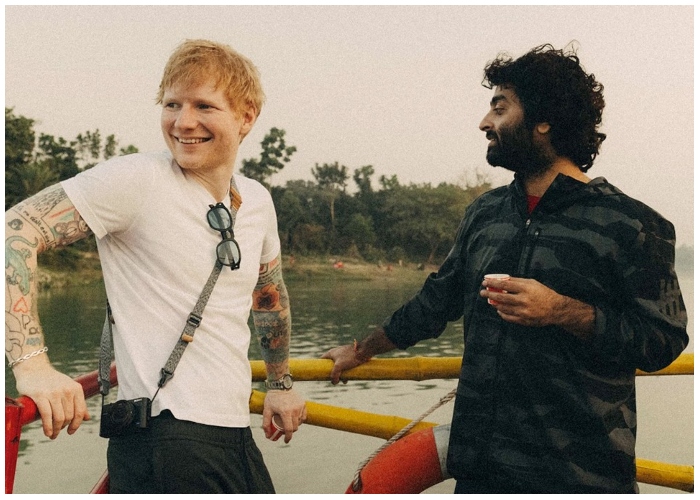
While the visuals impressed many, they also raised alarms. The actors involved hadn’t agreed to be featured, making this a case study in digital likeness abuse. The video’s popularity brought ethical concerns to the surface: how should likeness rights be handled in a world where AI can mimic faces in seconds?
3. “YAJU&U” Shocks Japan’s Music Charts
A quirky track created by artificial intelligence, “YAJU&U,” topped viral playlists in Japan thanks to its catchy hooks and nonsensical lines. It drew lots of attention, but not all of it was positive. Many listeners felt the song lacked any real message or emotional depth.
This moment reflected a growing concern: as algorithms pump out trendy content quickly, are we sacrificing meaningful storytelling for instant hits?
4. A Robot Rapper Raises Eyebrows
“Glorb,” a fictional AI personality, debuted rap tracks this month voiced by animated characters and generated entirely by machine. The beats, lyrics, and visuals—all automated.
The results were entertaining for some, confusing for others. Critics questioned whether it was music or simply a well-coded stunt. The lack of soul in Glorb’s videos reignited the classic question: is art more than just output? Can a machine really connect with listeners on a human level?
5. Lauv Shows What DIY Can Look Like in 2025
Singer-songwriter Lauv released an AI-generated music video featuring glitchy, surreal environments and abstract cityscapes. The production didn’t require a crew or location—it was built entirely with tools like Reelmind.ai.
For independent musicians and rising creators, this kind of innovation is huge. It lowers barriers to entry and makes ambitious visuals accessible. Still, Lauv’s success didn’t come from flashy effects—it came from the emotional honesty in his lyrics. AI added style, but heart came from the artist himself.
AI has changed the creative landscape—offering tools that empower, simplify, and innovate. But in the process, it’s challenging long-held beliefs about originality, ownership, and emotion in art. While platforms are flooded with AI-generated content, not all of it resonates.
Some creators, like Kelly Yu, are proving that tech can enhance, not erase, the human element. But the rise of viral AI characters like Glorb reminds us that something’s missing when machines lead the performance. For now, authenticity—powered by lived experience and human emotion—is still what makes music truly memorable.